
As someone whose profession is programming, do you still have an interest in writing code? Or has it become merely a means to make a living?
I’m writing this article, inspired by a small incident that happened over the weekend.
Recently, I’ve been learning ear training (sight-singing and ear training). One exercise involves chord layering, distinguishing between major and minor triads and identifying root position versus inversions from three simultaneously sounding notes. I quickly finished practicing the eight chords my teacher provided, but struggled to find more chords to practice. That’s when a thought struck me: why not build a webpage to help myself practice?
I quickly built such a webpage. Only the note playback and piano keyboard drawing parts required a bit of research; other functionalities could be handled directly by Cursor. My webpage was soon ready, not taking much actual time, but because I was busy with work, a whole week had passed. During this week, I used my self-made website to practice ear training, enjoying it immensely, checking in every day.
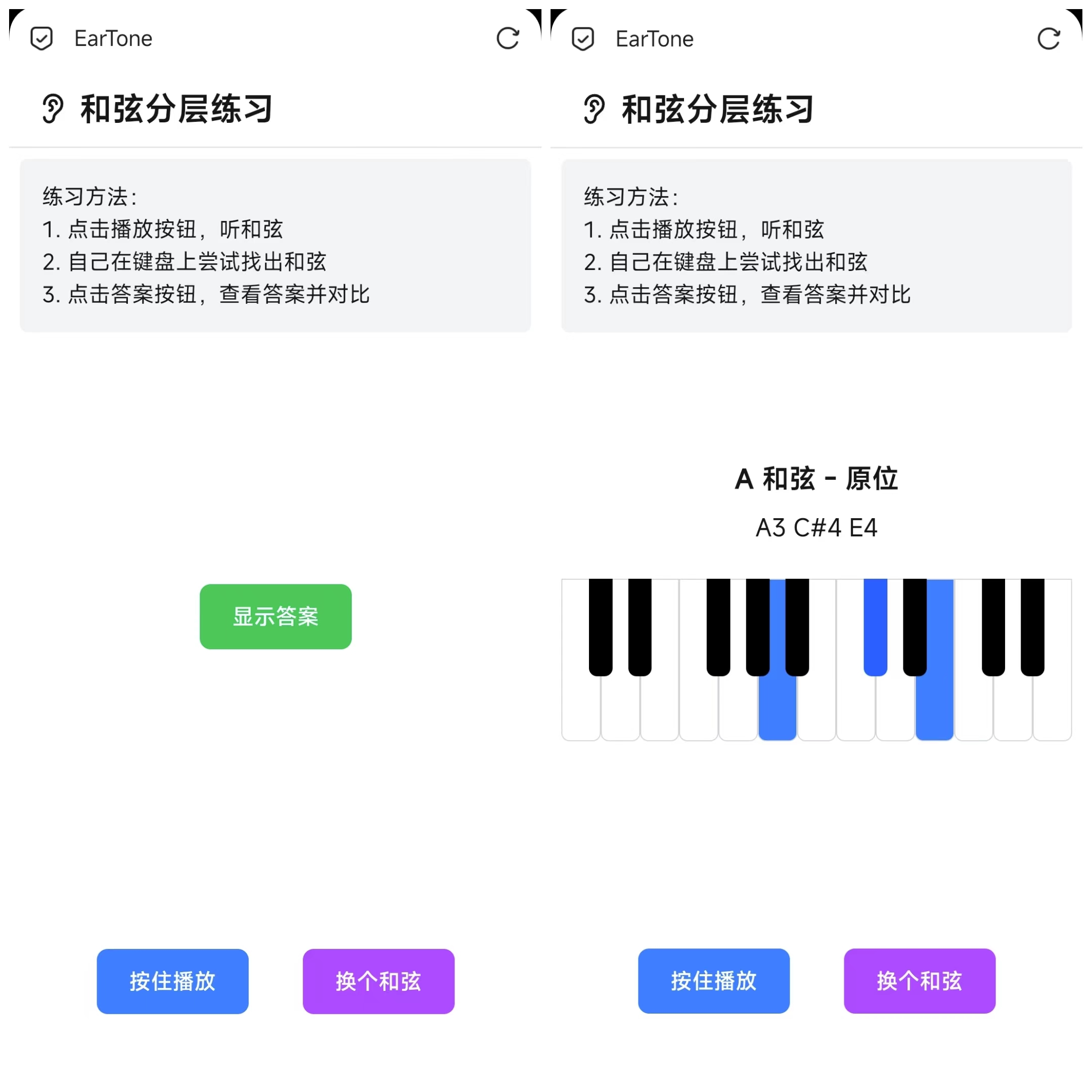
When giving my ear training teacher feedback on my progress, I also showed her my practice tool—the website I built myself. She opened it, tried it out, exclaimed how interesting it was, and expressed her anticipation for me to further improve the website. So, I quickly refined the website’s features, transforming it from a simple demo version for my own use into a version others could use. The next day, I shared the website in the teacher’s practice group, and it received a good amount of traffic within a day.
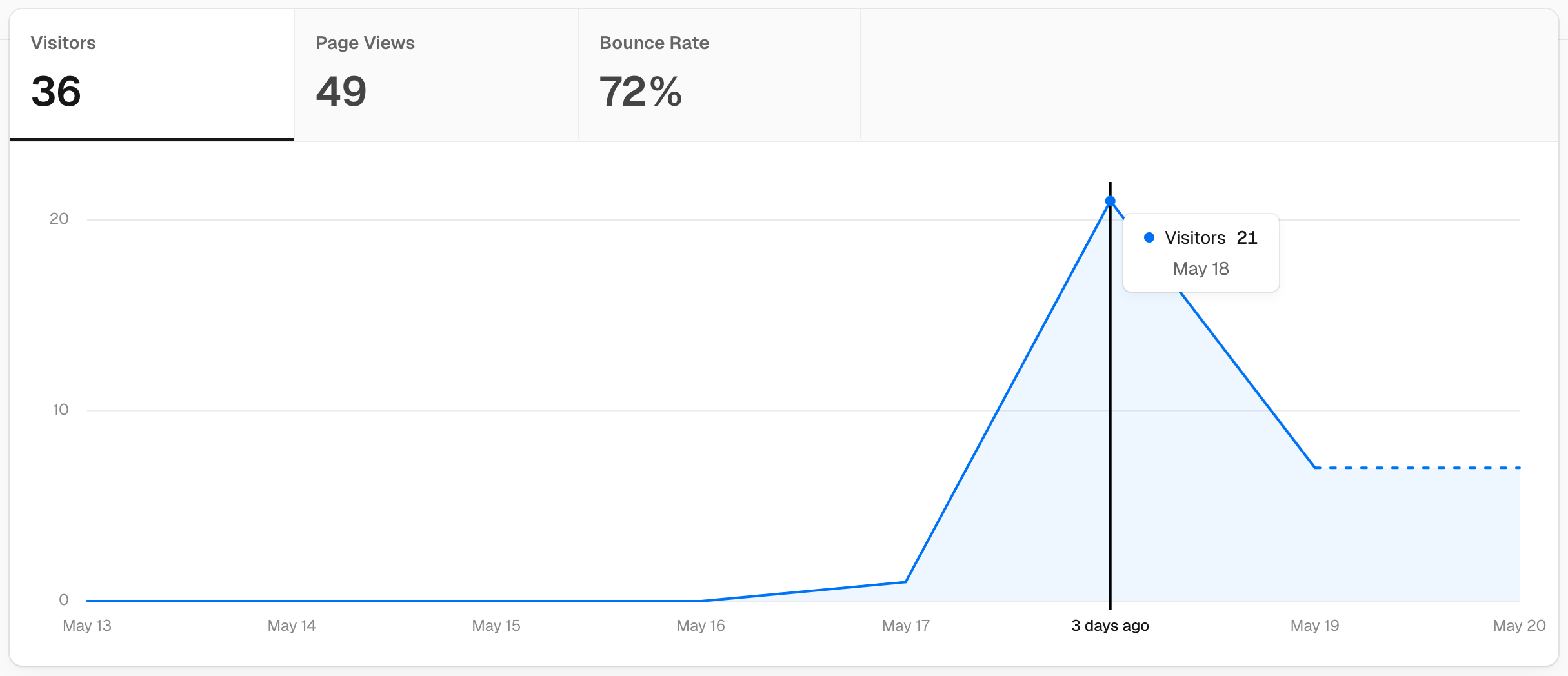
The moment I received my teacher’s positive feedback, a thought popped into my mind: “I am a creator.” When I lacked ear training practice materials and couldn’t find this functionality in any app on the market, I could create a website with such a feature. My creativity stems from my programming skills. Perhaps the programming techniques required to build such a website are quite ordinary, but to those who don’t code, it seems like something otherworldly and incredibly magical.
This is a small story about the sense of accomplishment I gained from programming. This little incident made me realize that we often lack such moments of positive feedback.
As a programmer, whether you’re in frontend, backend, algorithms, or data analysis, you rely on writing code to get your work done. As your years of experience grow, your programming skills become more proficient. Logically, your programming ability far surpasses that of the average person, yet the sense of accomplishment you derive from programming grows weaker. I even feel that the work process is a continuous stripping away of one’s creative spirit.
What is creation? It’s building something that didn’t exist in the world, from scratch. I believe most software products can be called creations, but as developers, why do we lack the joy of creation?
Because you lack a closed loop. Without a closed loop, you are no longer a creator; you become a cog in an assembly line. Creation should be a closed-loop process. As a creator, you would go through the entire process from idea, to planning, to implementation, to output. Then you’d collect feedback and enter the next cycle. But when you passively accept a requirement, perhaps not even knowing why you’re doing it, the closed loop is broken; when you painstakingly write code only to find that the product’s effect is poor due to lack of cooperation from partners, the closed loop is broken.
This is the current state of work: products that should be creations are fragmented into workload statistics and KPIs, and work that should be full of accomplishment turns into mundane daily routines. Consequently, you eventually fall into professional burnout; it seems that the motivation for work, and for programming, is gradually fading, and work becomes mechanical labor.
But this is programming! A skill capable of almost infinite creation, comparable to writing or painting. You can create things that didn’t exist in this world. Yet, you look at the code you’ve written and feel no sense of accomplishment at all—this might be the most terrifying thing in the world.
Marx said that labor is the essence of humanity. In an ideal society, people would spontaneously engage in labor, transforming the world and realizing themselves through it, because labor represents creation. However, in the real world, labor has become alienated; people are forced to work to earn money, and labor has become a hardship.
This might be exactly what company bosses want to see: they only want you to work diligently. As for a sense of accomplishment, it’s best if there isn’t any; a “workhorse” that overthinks isn’t a good “workhorse.” You don’t need creativity; you just need to be a screw, a gear, fitting tightly with everyone else.
You’ll find that work is a form of discipline; it consumes your time and energy, fragments your experience, and prevents you from feeling the joy of a creator. It doesn’t want you to stop and think, nor does it want you to have your own ventures, your own closed loops, your own creations.
Every company interview emphasizes “technical depth,” so you constantly delve into technology at work, believing that the deeper you research, the more promising your future will be. But unknowingly, you become confined to a limited sphere, completely forgetting what a closed loop is.
Because there’s no closed loop, you’re doing things but don’t know why you’re doing them; you focus on technical depth but can’t find joy in the technology itself. Until one day, you realize that the technology you’ve been pursuing is merely to satisfy others’ evaluation criteria.
So, can we break free from these evaluation criteria? Can we rebuild our own closed loops, even if they are small, to reclaim our creative spirit? Can we, when doing things, always start from the true value of the task, and not let our minds be surrounded by junk information like resumes, work output, owners, and KPIs?
Perhaps society is hindering you, and work is hindering you, but I hope you can break through these obstacles and become a creator. You will discover the power of life within yourself and rediscover the most fundamental joy of programming. You will create things that make you happy and are useful to others. When you truly have something you enjoy doing, you will no longer consider becoming a highly-skilled screw as your ultimate goal.